
Totalplay
Design system evolution and implementation for use in a native "super app"
2022 - 2023
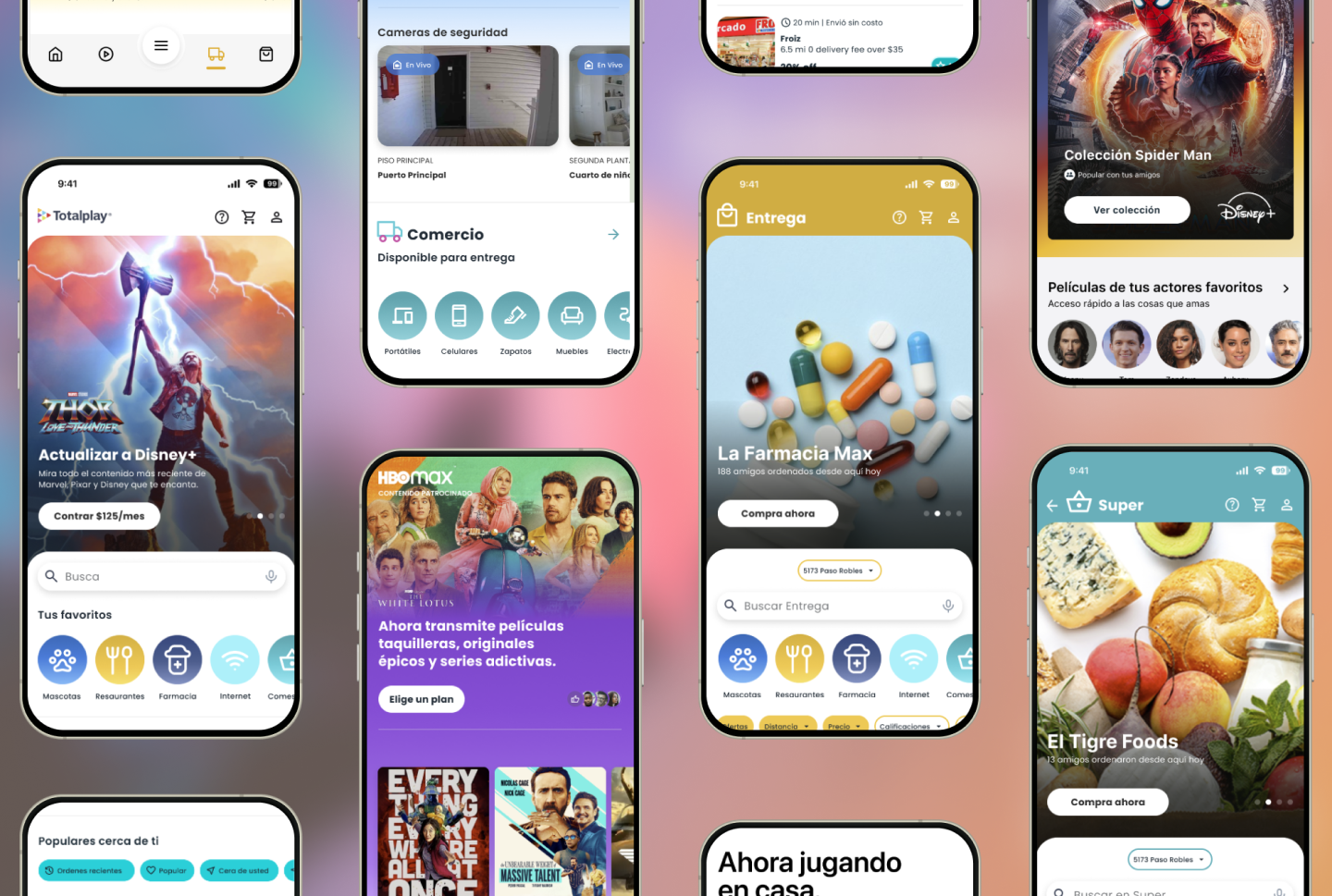
Totalplay had a sprawl of apps, product owners, and no one steering the ship. Their team could produce, but had no UX process. I was brought in to build one, mid-rebrand, mid-tooling-migration, mid-everything.
CATEGORIES
Design System
Native App
Brand Application
TEAM
Design Director (Myself)
3 Product designers
Totalplay internal design team
OVERVIEW
Totalplay's product teams each answered to different, disconnected owners, with no shared design process holding them together. The internal team could produce work, but had never operated as a connected UX practice. On top of that, the business had committed to a full rebrand and a super app to unify everything, all at once.
I was brought in to bring structure to a project whose ambition had already outpaced its process. Starting at the fundamental level of the system itself, I branched out into brand application and UX strategy for the upcoming super app, mentoring their internal team along the way so they could carry the work forward once I stepped away.
MY ROLE & RESPONSIBILITIES
Design Director — Led design on a fragmented, multi-owner product ecosystem undergoing a full rebrand meant to unify a dozen disconnected apps into one super app. The role balanced visionary, future-facing systems thinking with hands-on, meticulous UI/UX craft, guiding the team through an aggressively ambitious one-year timeline.
- Audited a fragmented ecosystem to establish a foundational system
- Directed how that system extended into the new super app and rebrand
- Defined UX strategy for implementation across disconnected teams
- Mentored the internal design team on systems thinking and Figma
- Aligned competing priorities across siloed product owners
- Balanced visionary systems thinking with hands-on UI/UX craft
- Setting direction without stepping away from the work itself
OUTCOMES
UNIFIED
10+ services
Brought TV, shopping, food, pharmacy, and more under one shared system
BUILT
1 design system
Created from the ground up to replace fragmented, siloed patterns
BRIDGED
Brand + Product
Aligned two disciplines that had never shared a process before and getting buy in
MIGRATED
1 tooling migration
Led adoption of new tooling from Sketch to Figma, guiding a team of novice designers
Design systems are hard.
APPROACH
Especially when the system needs to govern ten or more product lines that had never shared one before. Their system still lived in Sketch, the client wanted to move to Figma, and every piece of documentation needed to work in both English and Spanish, and on a good day, my Spanish is passable at best.
I started where any audit starts: understanding what already existed before deciding what should change. Weeks went into reviewing existing patterns across products, identifying what could be unified, and translating all of it into Figma from Sketch. From there, I worked alongside Totalplay's internal team to build a governance model, one that could flex to support a new super app while still feeling native to their existing products.
My Role & Responsibilities
My involvement wasn't just building the foundational system, it was making sure the team inheriting it could actually run with it. That meant setting up documentation that explained not just what each piece was, but why it existed and how to use it, in language their team could act on without me standing over their shoulder.
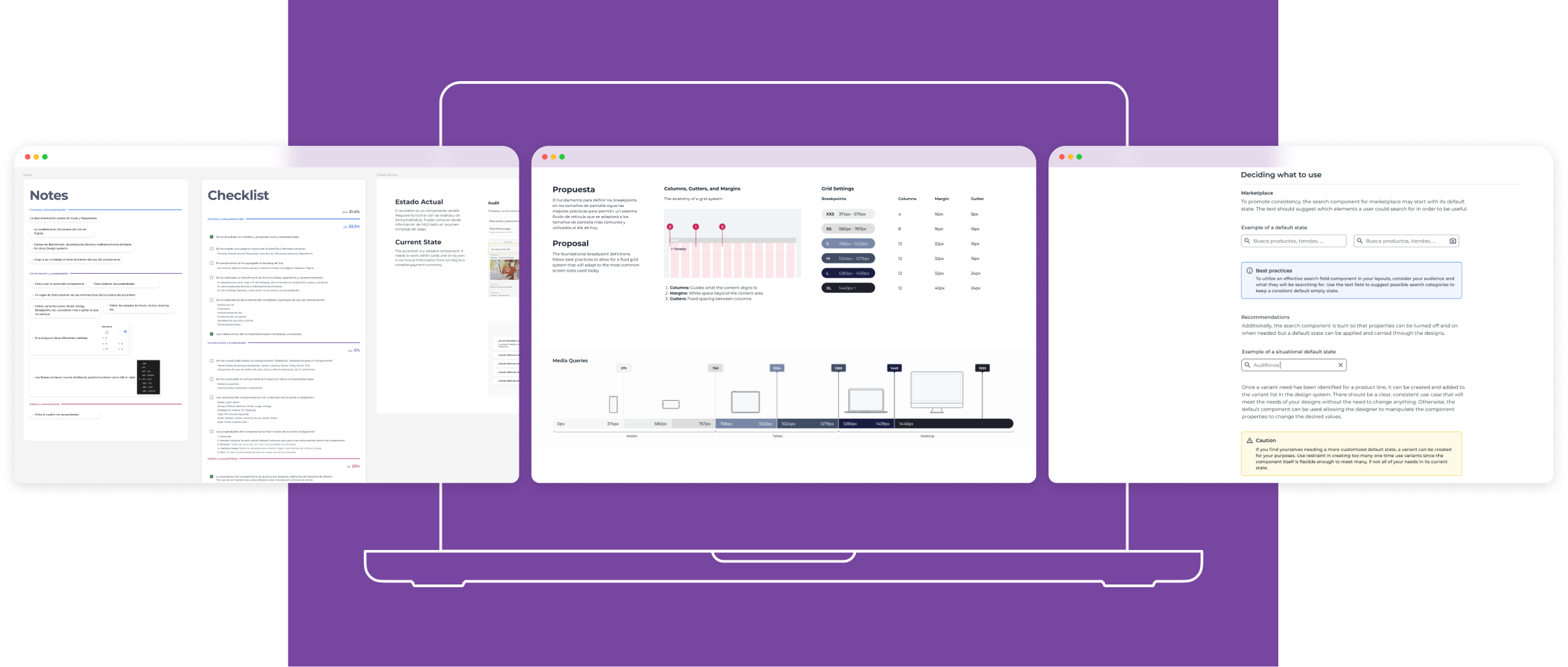
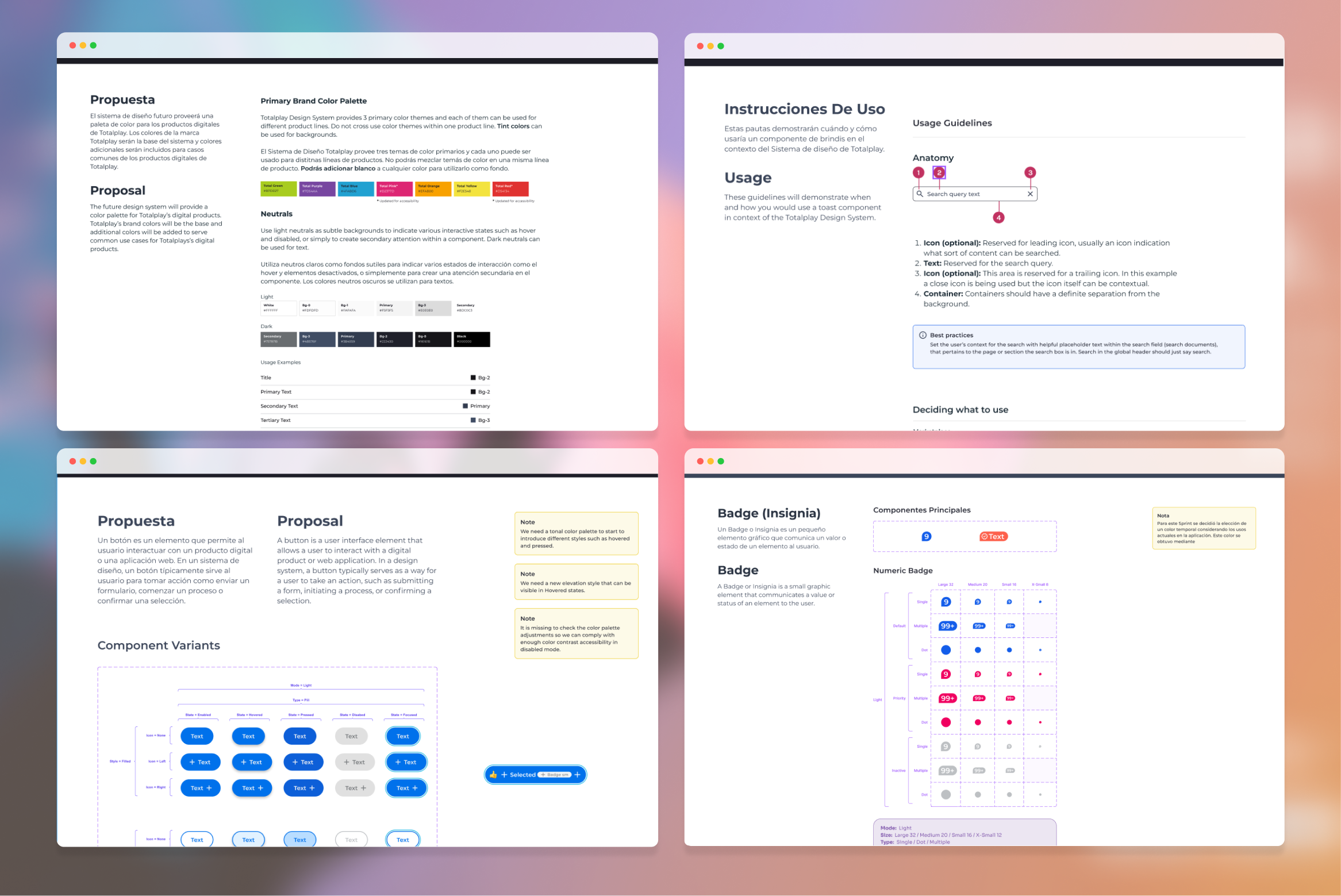
Above: Examples of the type of system level documentation that was iterated on and delivered.
From foundation to frontier
CREATIVE VISIONING
A design system is only a proof of concept until it has to hold up somewhere new. Totalplay's rebrand and super app initiative meant the foundation I'd just built couldn't stay static, it had to flex into a brand-new experience while still feeling native to the products it came from.
This is where the work stopped being just structural and became something closer to creative direction. I love getting in on the ground floor of a good design system project but my heart is always going to be in conceptual work. I moved between two modes constantly: thinking several steps ahead about where the system needed to go, then dropping into the actual screens to make sure the craft held up once real content and real constraints entered the picture. Neither mode could take a back seat to the other. A system that's only visionary never survives contact with a shipping product, and craft without direction just produces polished dead ends.
My Role & Responsibilities
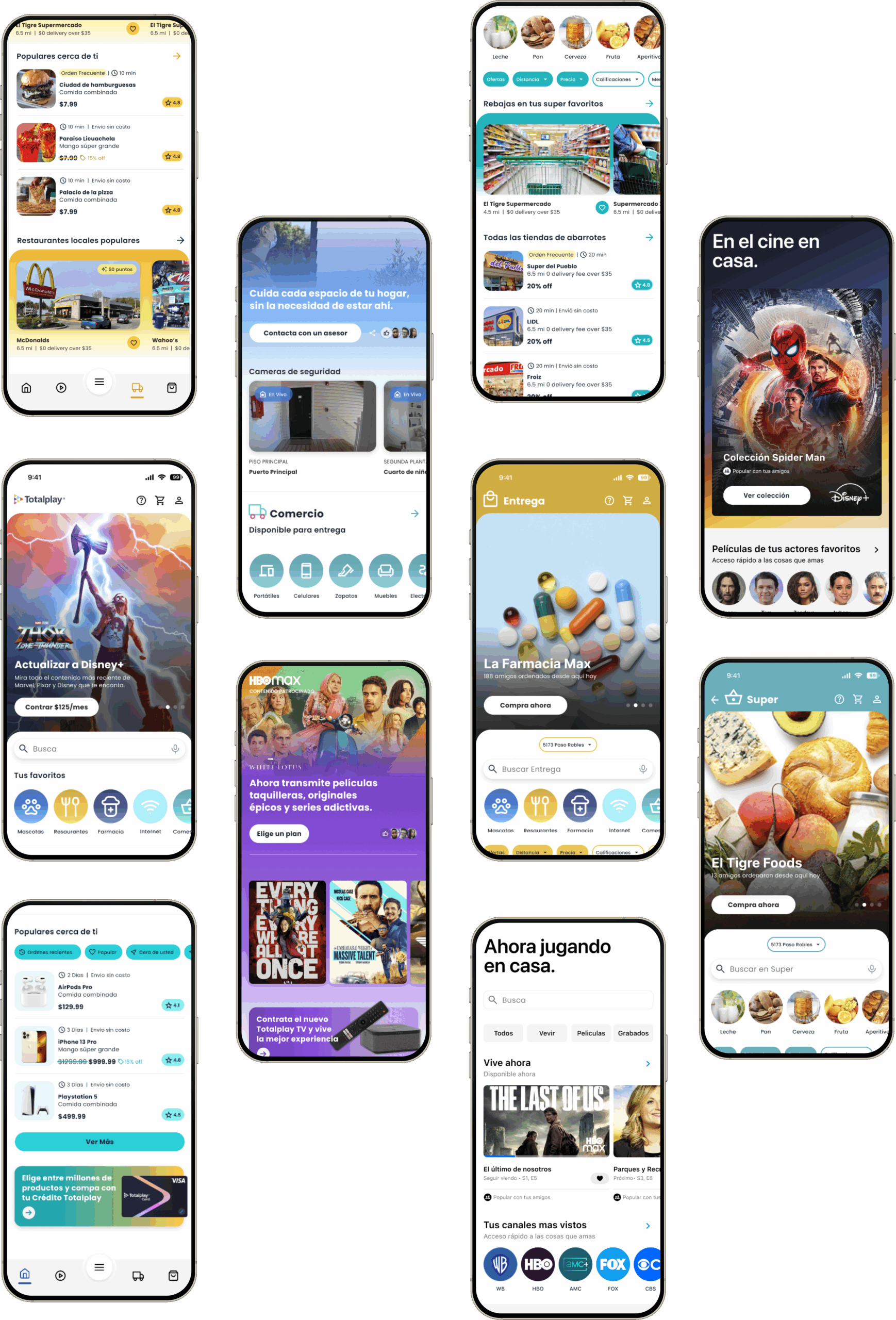
I focused on translating the system's foundational rules into an entirely new app context, working through how brand expression should show up across a super app spanning categories that had never shared a visual language before. I moved fluidly between conceptual direction, setting the vision for how the new experience should feel, and hands-on interface design, making sure that vision actually held up pixel by pixel.
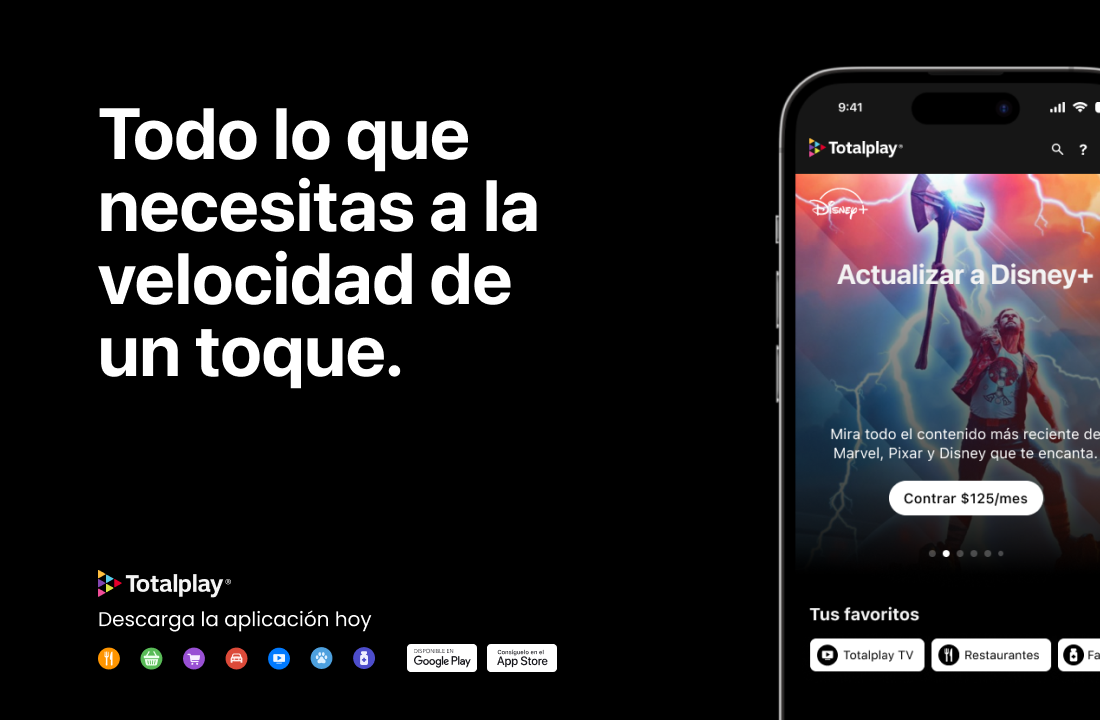
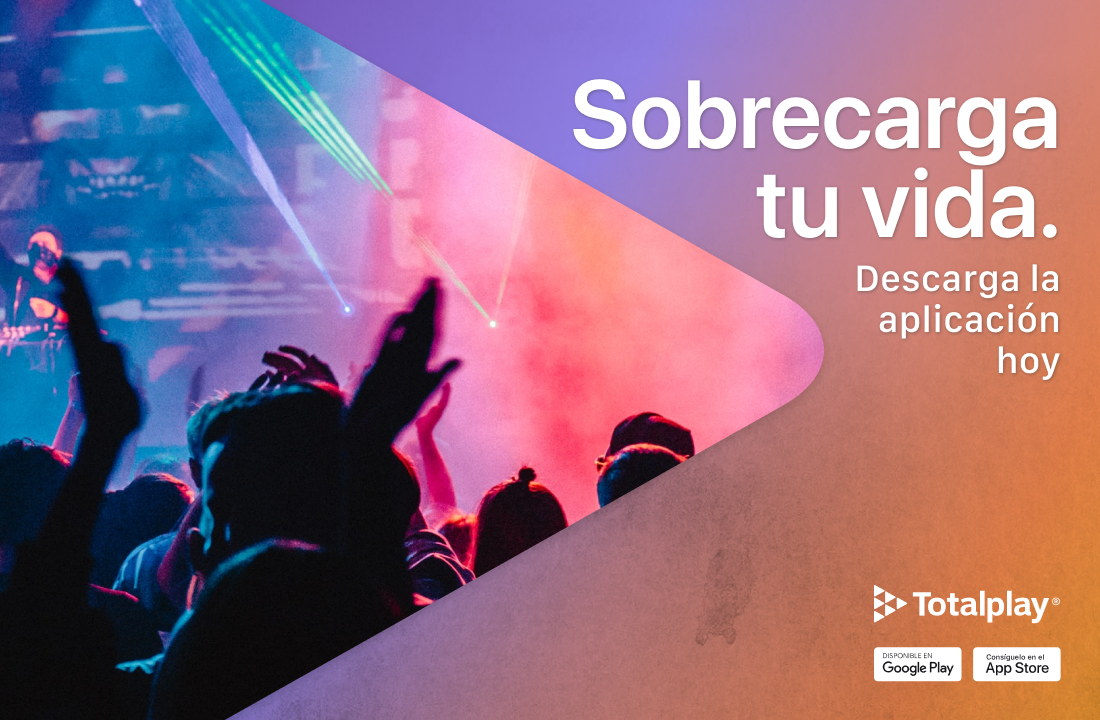
Alongside the work on the app, I explored how far the new brand language could stretch beyond the app itself, sketching out conceptual ad strategies and a handful of billboard designs to show what a unified Totalplay could look like in the world, not just on screen. It was a smaller, largely solo exploration, but it pointed toward what a fully tied-together brand experience could become.
Hasta Luego
TAKEAWAYS
There's no launch date attached to this one, no clean before-and-after to point to. What's left instead is quieter: a shared visual language where there used to be noise, a system with real bones under it, and a team that grew into a capable and confident group of design thinkers.
Not every project ends with a launch. Some end with a team that no longer needs you. And that's ok.
When I started, Totalplay's internal team was understandably guarded. They'd been handed outside consultants before, people who came in with a fixed idea of 'right' and expected everyone to fall in line. I spent the first few weeks proving I wasn't that. Somewhere between the audits, the workshops, and muddling through my Spanish together, that shifted.
Their teams had a solid foundation to build from. The internal design team was set up with a solid system to build from. They increased their confidence, tooling fluency and technical capability.
They had a roadmap and a vision for the future. Experimenting with many different ways to tackle the same problems allowed for a diversity of though that was not previously part of their internal process.
Starting conversations got the right people making smart decisions. Cutting though bureaucracy by connecting people in a common goal helped move conversations a long and set up a future where teams worked together, not in opposition.
By the end, we weren't just handing off a system, we were handing off a new capability. I don't have a launch date or an ROI figure for this one. What I have is a harder question to answer honestly: did I leave this team more capable than I found them? I think the answer is yes.
Master of karate and friendship for everyone.
The End