
Xbox Royalties Platform
Crafting a high-fidelity, dev ready UI for blockchain royalty tracking
2021 - 2022
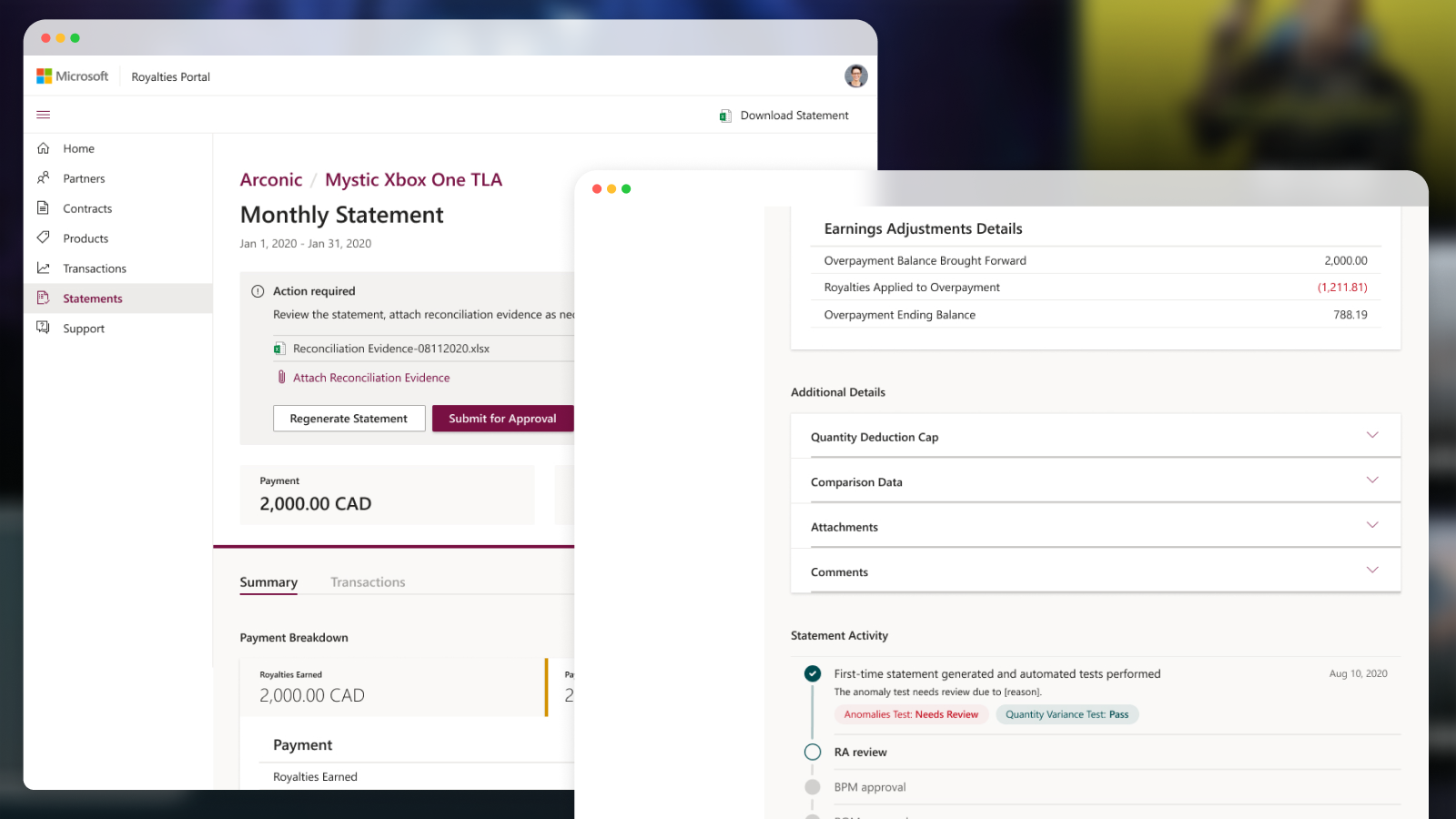
Publishers used to wait up to six months for a royalty statement. Now they can check the numbers in real time.
CATEGORIES
B2B
Internal Tooling
Web Application
TEAM
Myself - Design Director
3 UX Designers
1 Product owners
3+ Engineers
OVERVIEW
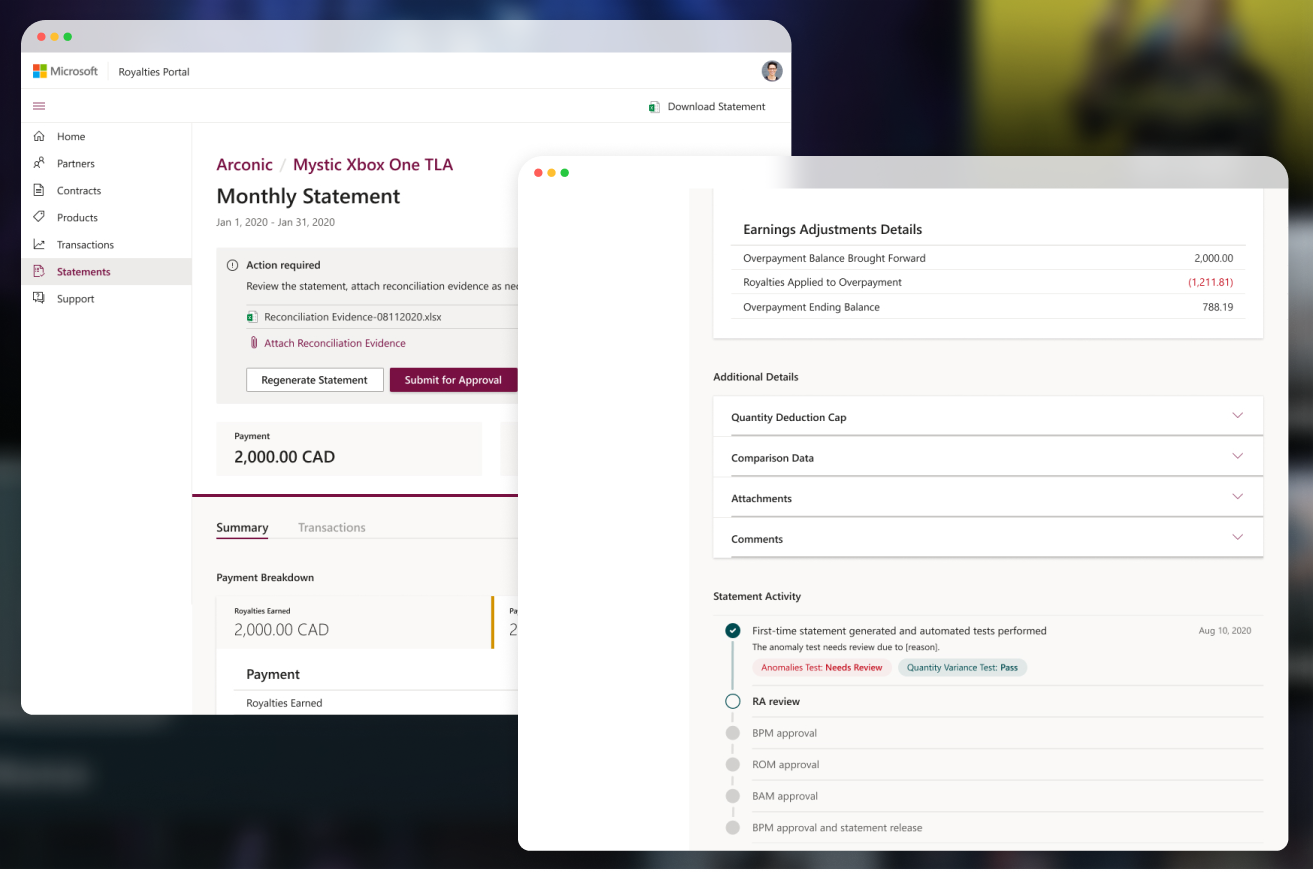
Game publishers selling on the Xbox digital storefront had no reliable way to track royalties owed to them, relying on manual spreadsheets and infrequent updates from Microsoft. Verifying a single royalty payment could take months, leaving publishers with little visibility into their own earnings.
I led design on a cross-functional initiative to replace this with a blockchain-based royalty platform, aligning Product, Engineering, and Business stakeholders around a system with no real precedent to draw from. The work lived inside Microsoft's Fluent Design System, which meant designing new patterns where Fluent had no answer yet, then submitting those components back for review rather than working around the gaps.
The result was a platform where every transaction lived on-chain, visible and verifiable in real time, replacing a six-month wait with instant, self-service clarity for publishers.
MY ROLE & RESPONSIBILITIES
Design Lead — Led design on a cross-functional team building Microsoft's blockchain-based royalty platform, serving as the visual design anchor for a team that included a dedicated UX researcher and product manager, on a problem space with no existing precedent to build from.
- UI & component strategy within Microsoft's Fluent Design System
- Partnered with a UX researcher to shape interaction patterns
- Translated requirements into sprint-ready features with the PM and SMEs
- Sized & scoped work alongside Microsoft engineers using agile methodology
- Applied findings from three rounds of live user testing (10+ participants, over 12 months) to refine design decisions
While my primary focus was UI and interaction design, I also shaped feature scoping, sprint planning, and stakeholder alignment across product, research, and engineering.
OUTCOMES
DESIGNED
7 core flows
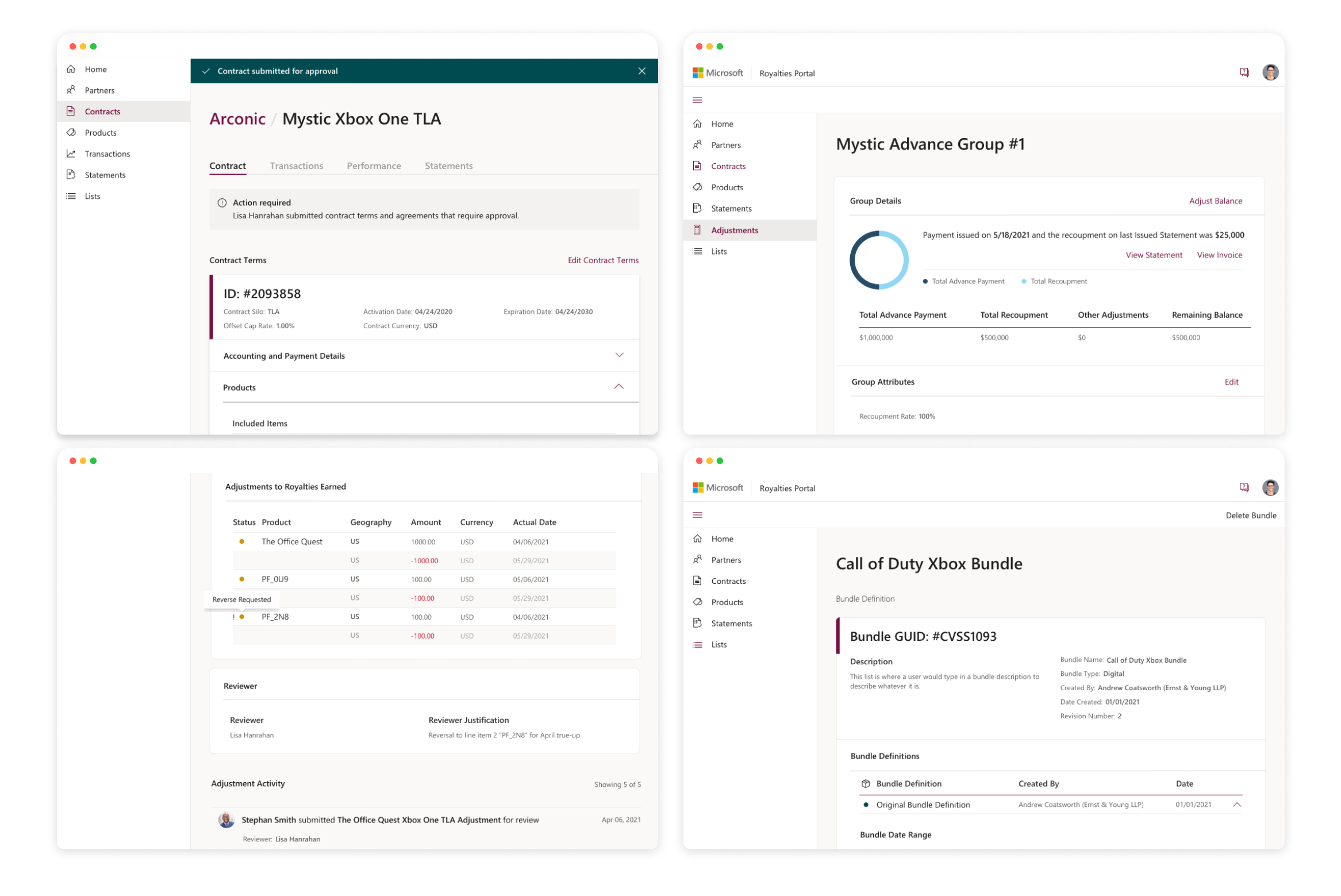
End-to-end design across adjustments, contracts, products, statements, bundling, unbundling, and bulk actions
VALIDATED
Live tests, real code
3 rounds, 10+ participants each, tested in live code over the course of a 12 month engagement
ALIGNED
3 disciplines
Collaborated as a trusted peer across Product, Engineering, and Research
VERIFIED
Chain-based trust
Every transaction lives on-chain, replacing uneccessary wait times with real-time clarity
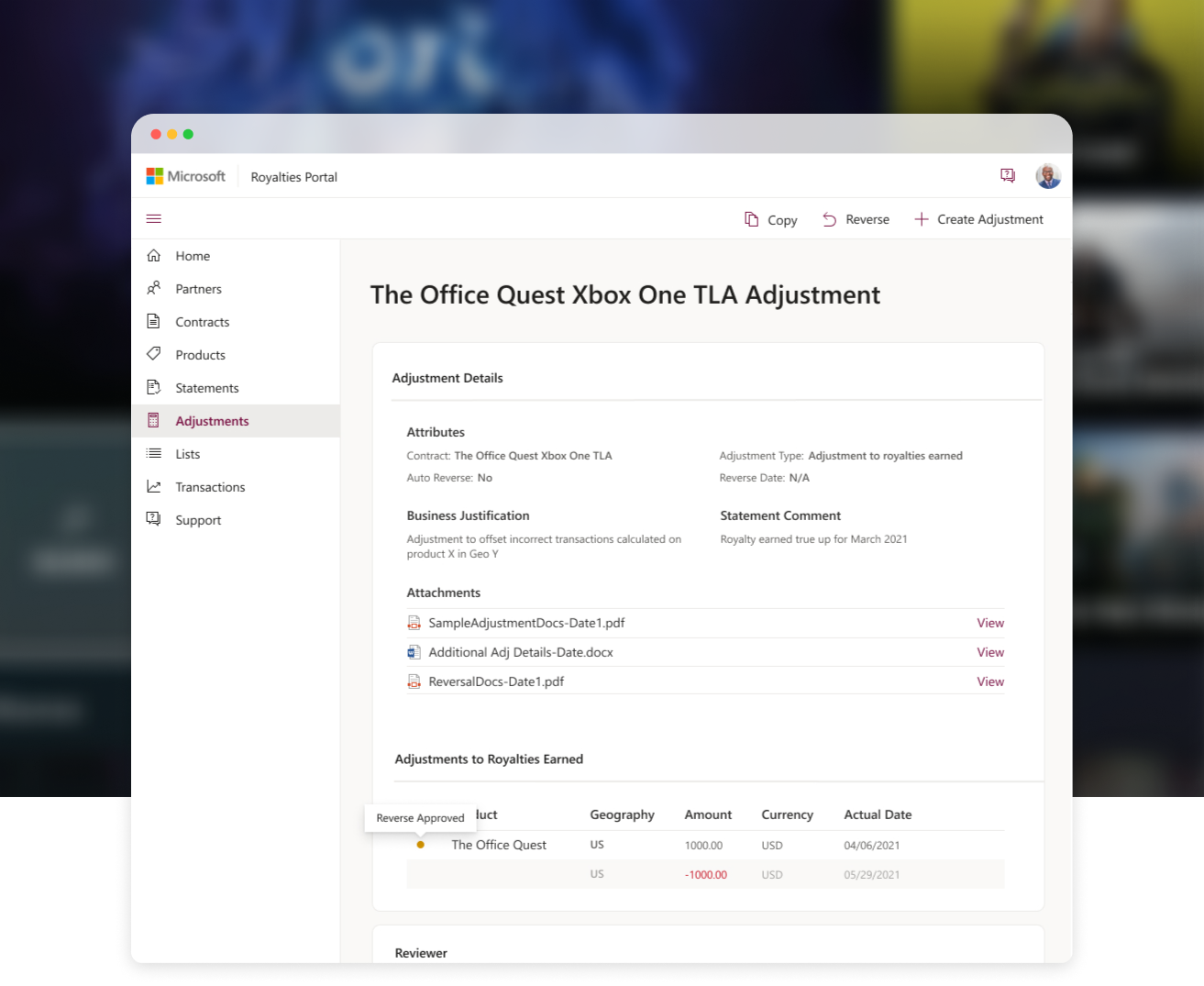
Problems come in threes
APPROACH
If a publisher's royalty numbers looked wrong, there was no paper trail, no self-service path, and no clear way to resolve the dispute. The blockchain solved the trust problem structurally, every sale could be verified and traced. But three compounding problems stood between that idea and something publishers could actually use.
The first was language. Publishers referenced titles with their own internal codes. Microsoft used a separate set for Xbox store listings. The blockchain layer added a third identifier system on top of both. Before any screen could be designed, the team needed one shared mental model of how those three systems related to each other.
The second was a mid-project platform shift: partway through, Microsoft moved the entire product from Sketch to Figma. Rather than treat it as a disruption, I used the migration to rebuild the file architecture and component structure into something more scalable than what we'd started with.
The third was the design system itself. Fluent gave the product credibility and consistency, but had no native pattern for financial data at the complexity this platform required. Deciding when to work within Fluent and when to extend it was a constant judgment call, one that meant weighing Microsoft's brand integrity against what our users actually needed to trust their own numbers.
My Role & Responsibilities
My involvement in this phase was largely facilitation: running working sessions to align designers, PMs, BAs, and developers around the three-code-system problem before any design work could move forward. That shared model became the foundation the entire information architecture was built on.
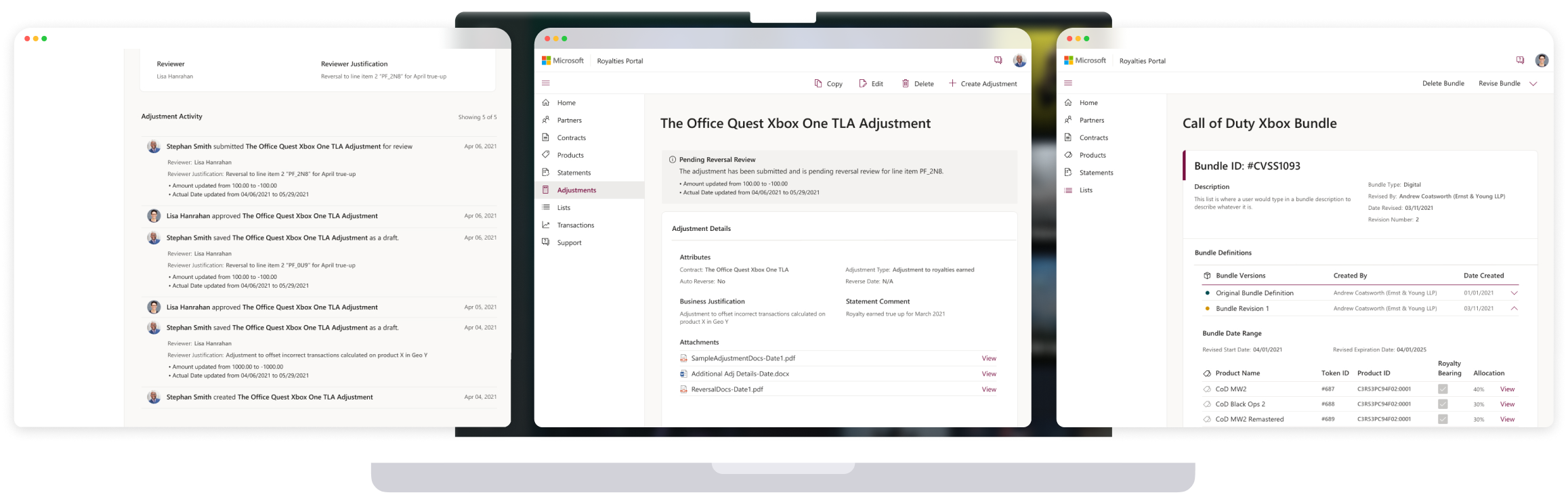
Trading sheets for a chain
PROCESS
With the team aligned on how the three identifier systems mapped together, design and product moved into parallel sprints. User testing was structured around three dimensions: perceived transparency, speed to task completion, and confidence in the data. Rather than treating each round as a pass/fail checkpoint, I brought findings directly into sprint planning, translating what we learned into concrete implications for both design and product decisions.
Fluent gave the product credibility, but it hadn't been built for financial systems at this level of complexity. Where gaps showed up, I used an atomic approach, treating Fluent's base components as building blocks to construct new patterns that still felt native to the Microsoft ecosystem, rather than bolting on something foreign. Where a genuinely new component was the right call, I documented the reasoning so it could be considered for adoption into the broader system.
My Role & Responsibilities
My involvement meant holding two things at once: respecting a system built for consistency across all of Microsoft's products, while pushing it to handle something it hadn't been designed for yet. Extending a design system responsibly, with reasoning and precedent, is a different skill than simply designing within one. Done well, the individual components we built didn't just solve our problem, they made Fluent itself a little more capable of solving the next one.
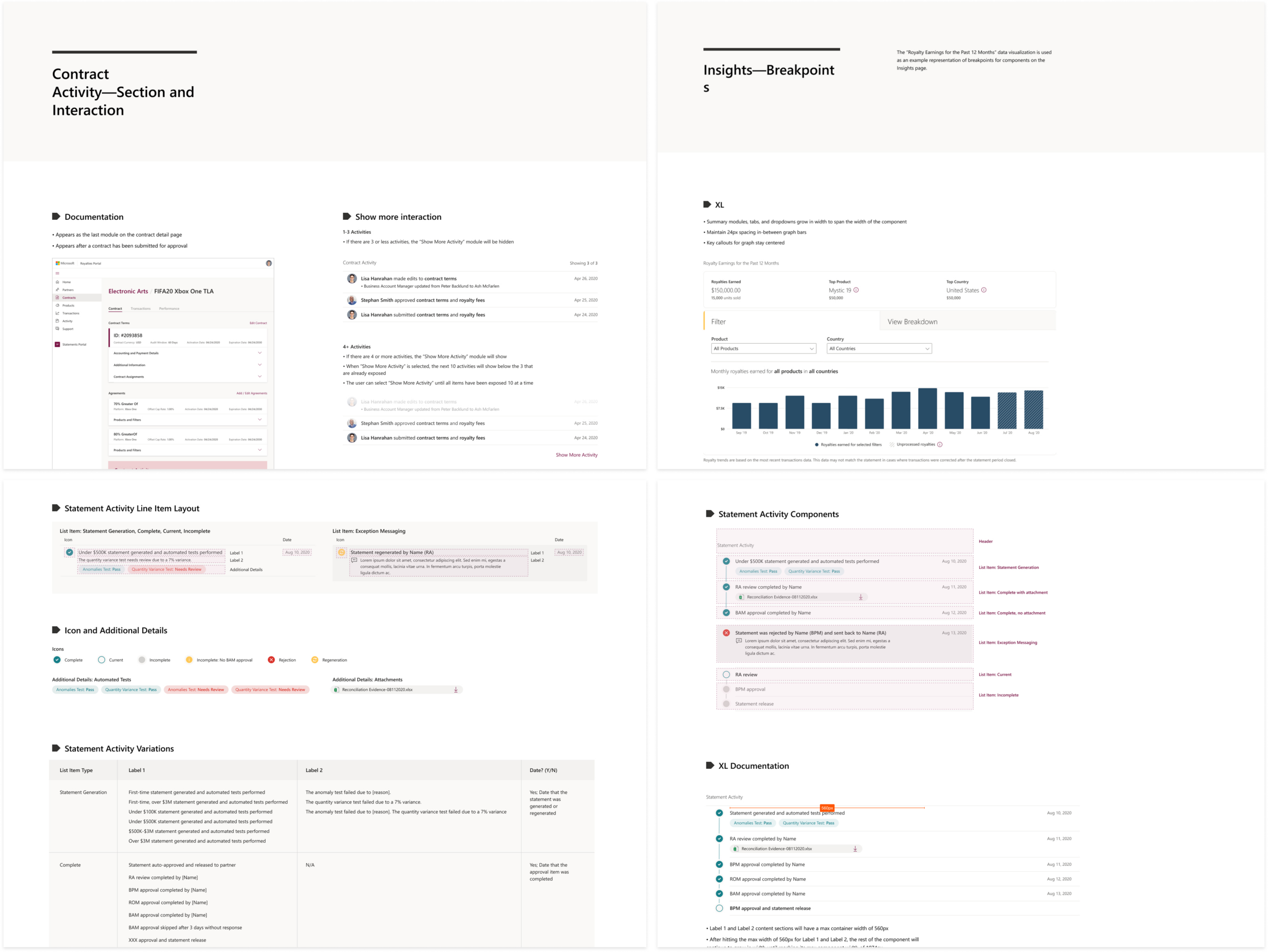
Above: Example documentation for new or updated components built on the Fluent system and used in the royalties app.
What does it all mean?
TAKEAWAYS
The product launched in closed beta with access granted to major publishers, including Activision and Bethesda. Transactions that had once operated on a six-month lag were now visible in real time. Discrepancies that had previously been unresolvable without a paper trail now had a complete, timestamped audit history. The ambiguity that had defined the publisher-Microsoft financial relationship for years had a structural solution, and design was central to delivering it.
The most valuable contribution isn't blindly following a system. It's knowing when, and how, to grow it
What I value most about this project in retrospect is that the hardest problems were never visual. They were about getting a team of smart people, each with different expertise, to a shared understanding fast enough to build something coherent. That kind of facilitation and strategic clarity doesn't always show up in a screenshot, but it's often what decides whether a complex product succeeds or stalls.
It also gave me a clear perspective on design systems that I've carried forward since: the most valuable contribution isn't blindly following a system, it's knowing when, and how, to grow it.
Master of karate and friendship for everyone.
The End