
Microsoft Xbox
OVERVIEW
Game publishers selling on the Xbox digital storefront had no reliable way to track the royalties owed to them in real time. Microsoft was building a blockchain-based royalty management platform to solve that. As the lead designer on the engagement, I helped shape the product strategy, define the design approach, and guide a cross-functional team through the complexity of building something that had no real precedent in the space. After the initial launch, surveys showed that publishers reported a 100% increase in perceived financial transparency. Trust in the data increased measurably. Users felt significantly more confident managing royalties independently rather than waiting on Microsoft to surface the numbers.
CLIENT
Microsoft Xbox
SERVICES
Product design
UX design
User research & testing
Design system implementation
MVP product launch
B2B Product Design
CONTRIBUTION
Design & creative direction
Design system
Product Design
TEAM
Lead Product Designer (me)
Lead UX Designer
Product Manager
Business Analyst
Tech Lead
Senior Developer
The Opportunity was to utilize the blockchain in a way that increased financial transparency in a product where there previously was none.
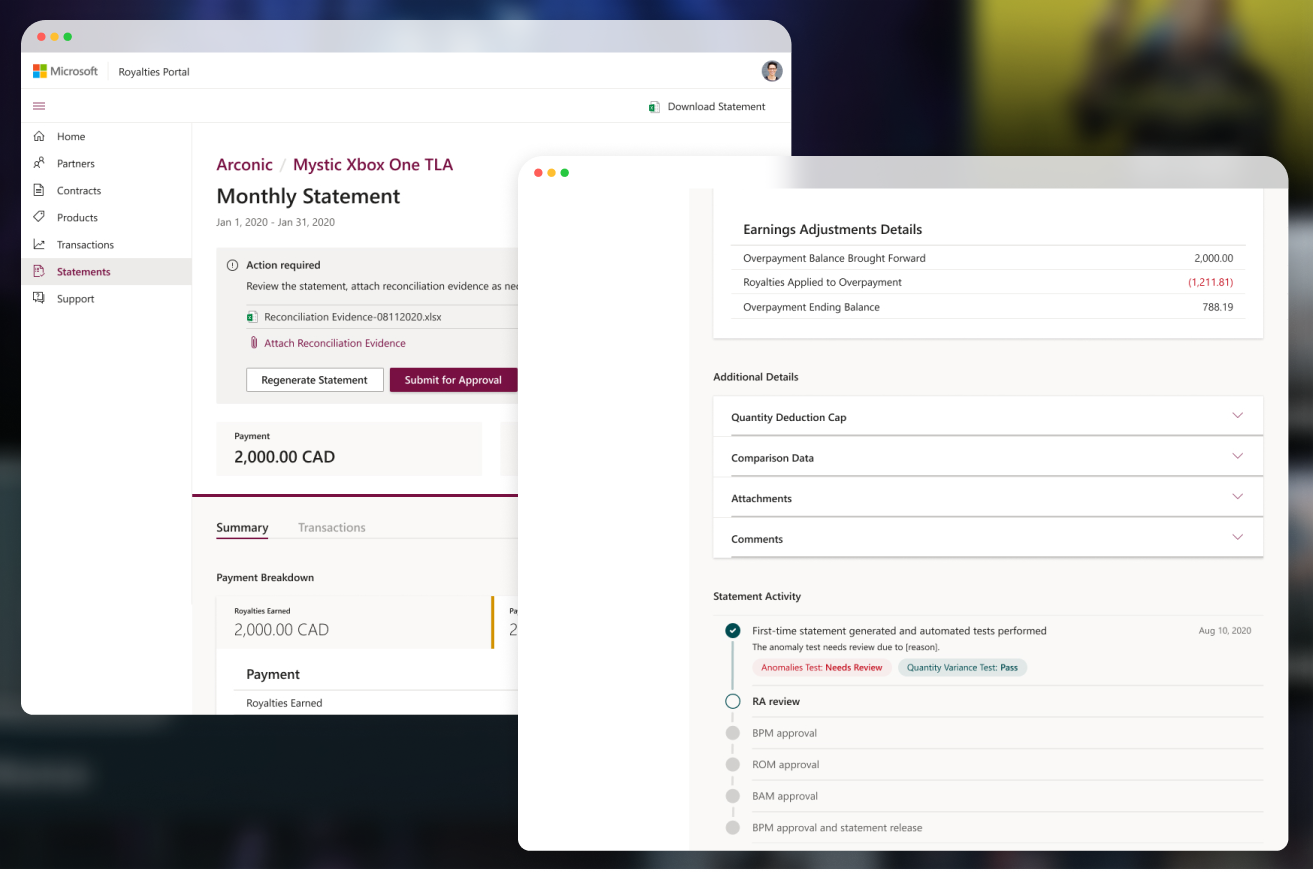
Before this product existed, publishers had to wait up to six months for an Xbox representative to send over a spreadsheet containing their royalty transactions.
If the numbers looked wrong, there was no paper trail, no self-service path, and no clear way to resolve a dispute. Publishers were operating on trust with little transparency and even less control. The blockchain provided an immutable, auditable record, meaning every sale could be verified, traced, and disputed with evidence rather than assumption. The strategic opportunity was significant: design a self-service experience that fundamentally changed how publishers related to their own financial data, and in doing so, rebuild trust between Microsoft and its publishing partners at scale.
APPROACH
The Challenge. Three compounding problems shaped the strategic direction of this project.
The data complexity was unlike anything the team had encountered together. Publishers use internal product codes to reference their titles. Microsoft uses a separate set of codes for Xbox store listings. The blockchain references transactions with its own identifiers. Before any design work could move forward, someone needed to get the entire team, designers, PMs, BAs, and developers, aligned on how those three systems related to each other. I took on that facilitation role early, running working sessions that built the shared mental model the product depended on. That investment up front shaped the information architecture of the entire experience.
Midway through the engagement, Microsoft required the entire product to migrate from Sketch to Figma. Rather than treating it as a disruption, I used the migration as an opportunity to re-examine our file architecture and component structure, setting the team up with a more scalable foundation than we had started with.
The Microsoft Fluent Design System gave us credibility and consistency, but it had no native support for financial data visualization at the complexity this product required. Deciding when to work within the system and when to push it further was a recurring strategic call, one that required balancing Microsoft's brand integrity against the genuine functional needs of our users.
My Role
I operated as the lead designer on a cross-functional product team, working alongside a senior UX designer, Product Managers, Business Analysts, Tech Leads, and Senior Developers. Beyond the design execution, my primary contribution was helping the team make decisions. That meant facilitating alignment on data complexity early in the project, contributing to product strategy prioritization, advocating for user needs in sprint planning, and making the call on where the Fluent system needed to grow to serve this product's specific demands.
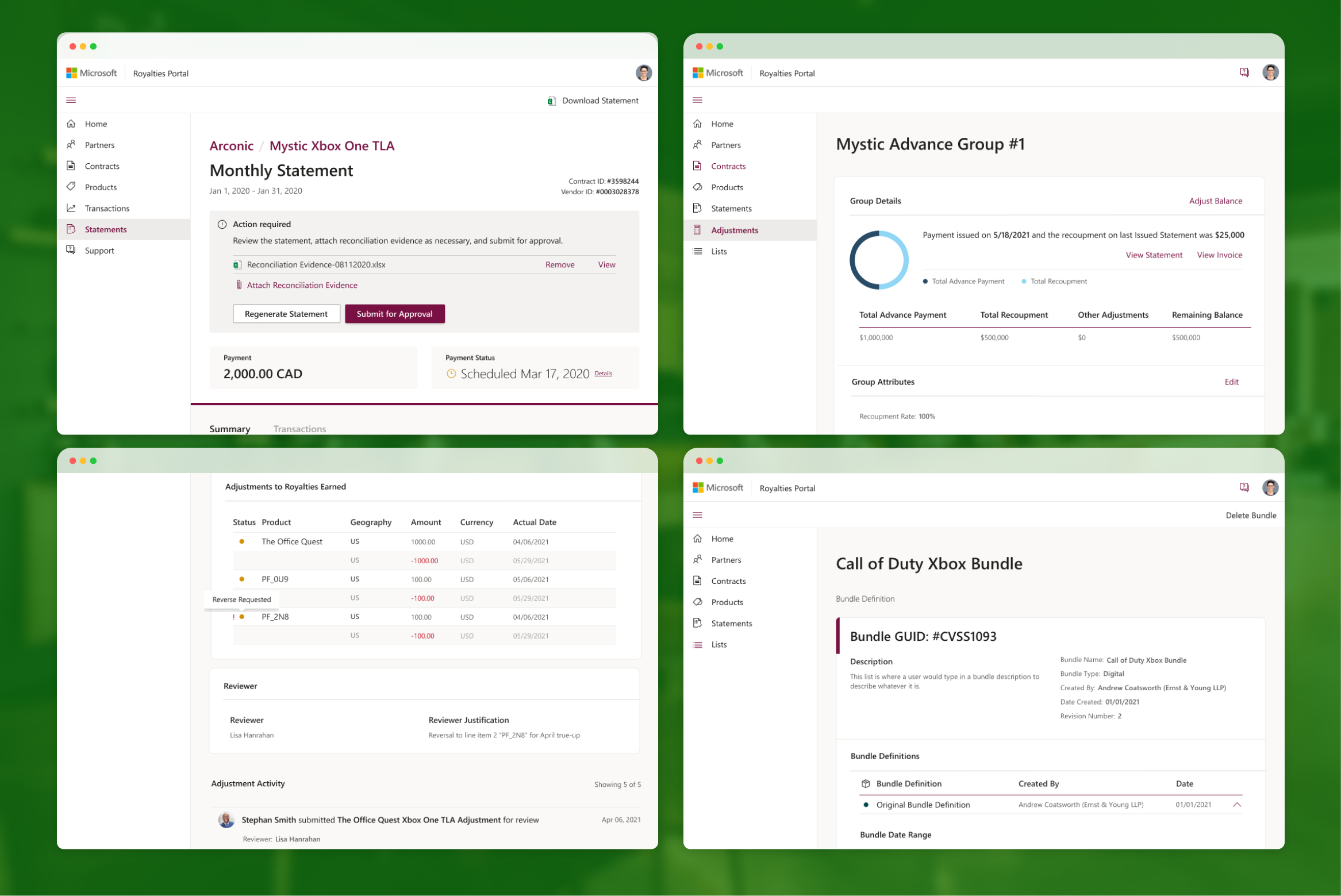
The Process
Early sprint work focused less on screens and more on shared understanding. I facilitated working sessions that brought the full team to alignment on how publishers, Xbox storefront, and blockchain identifiers mapped to each other. That foundation informed many of the information architecture decisions that followed.
Design and product then worked in parallel sprints, with user testing focused on three dimensions: perceived transparency, speed to task completion, and confidence in the data.
My invovlement: I treated each round of testing as a strategic input rather than a validation exercise, bringing findings directly into sprint planning and framing the implications for both design and product decisions.
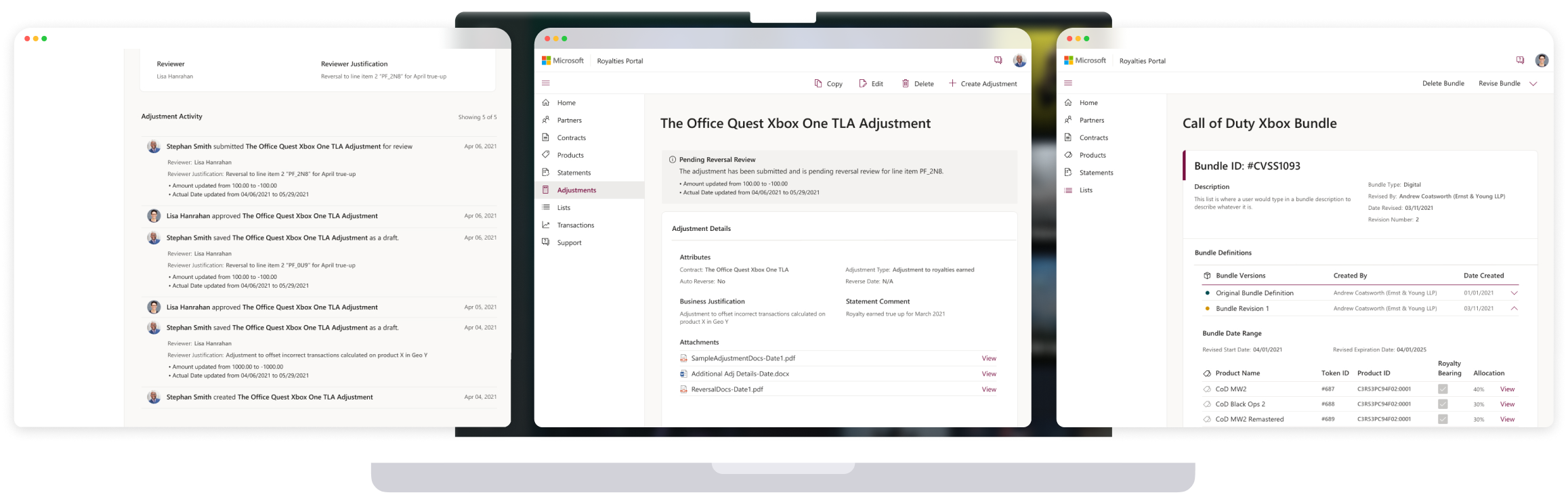
Working with an established system
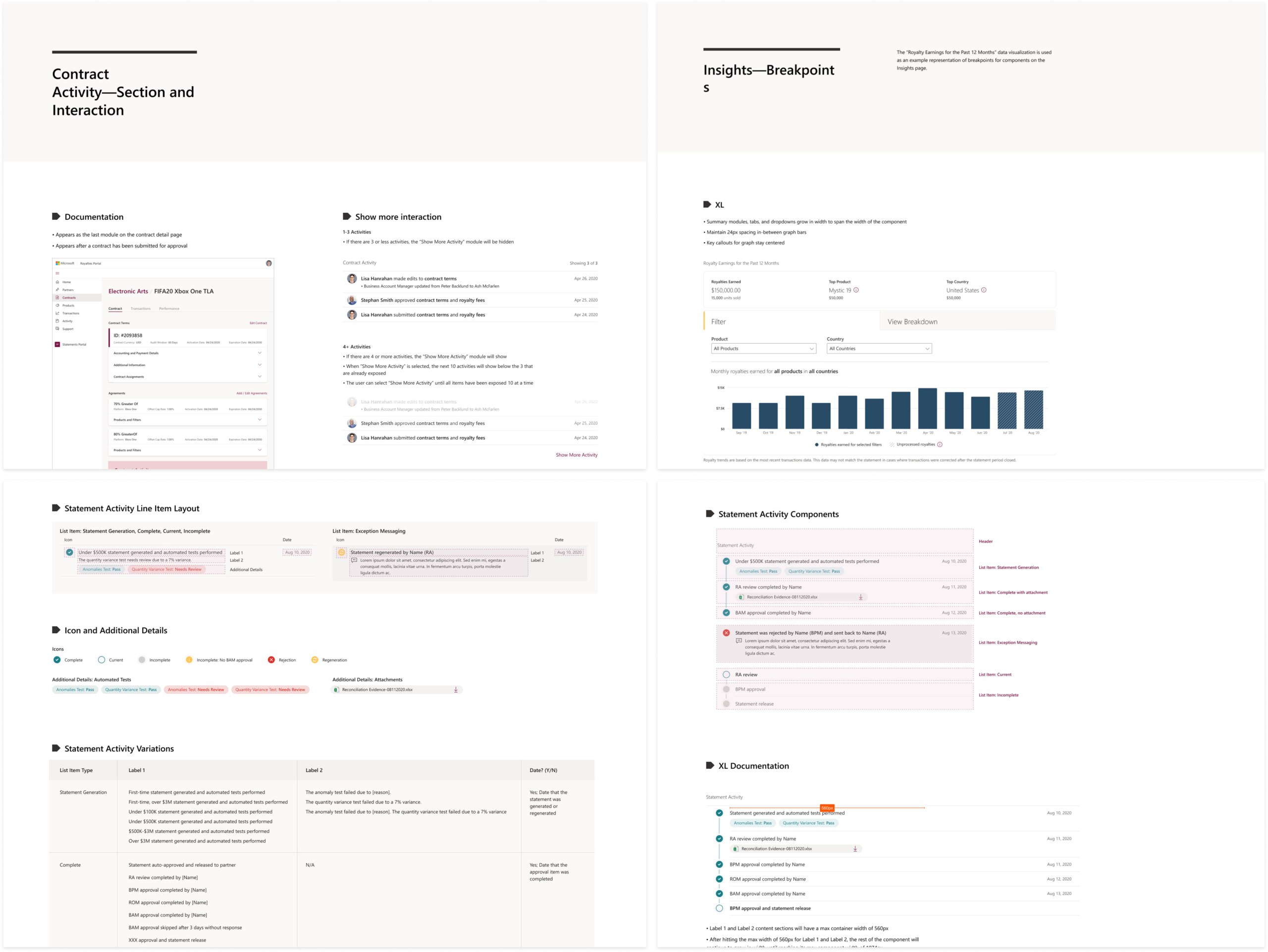
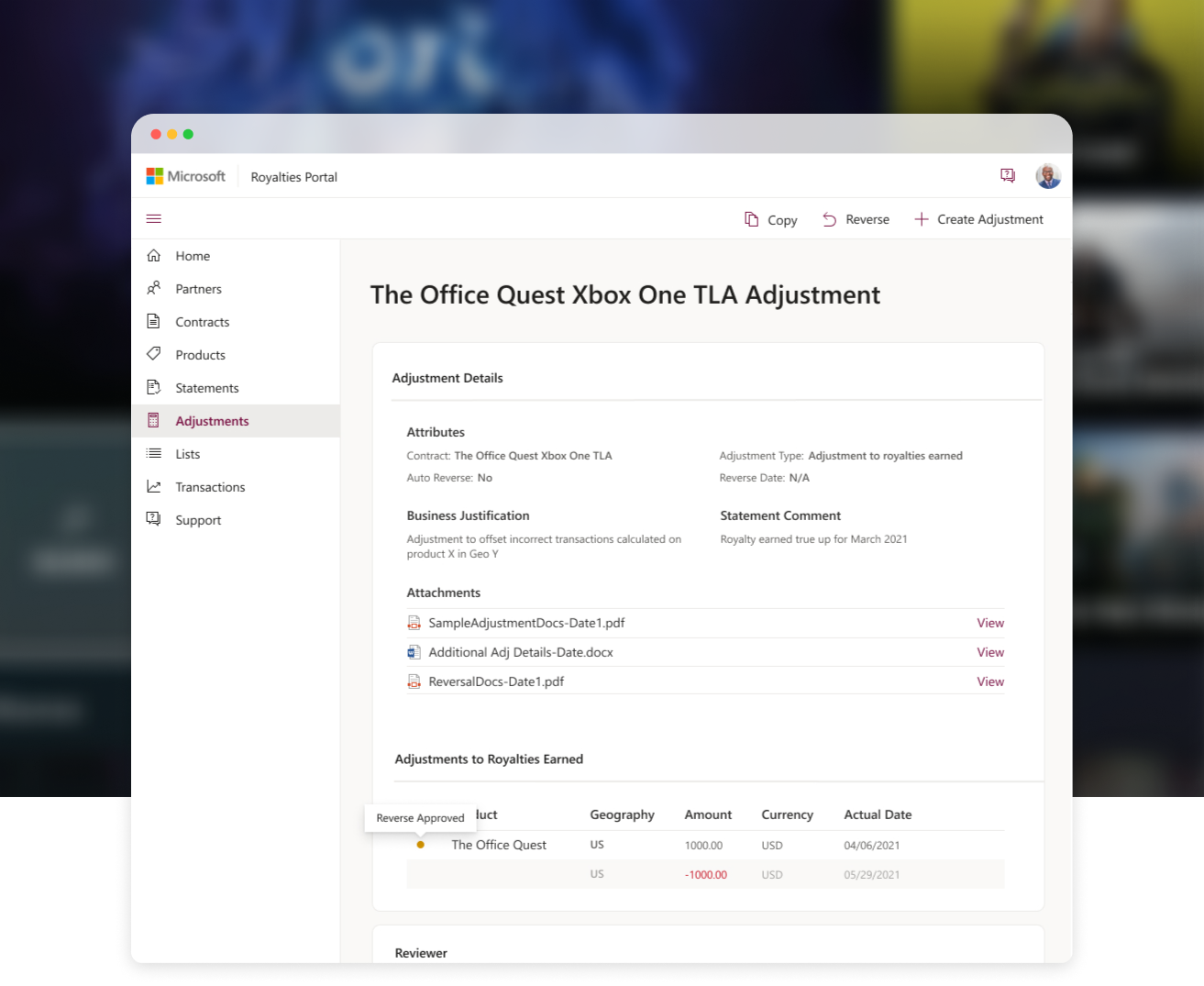
For the gaps in the Fluent system, I developed an atomic approach, using Fluent's base components as building blocks to create new patterns that felt native to the Microsoft ecosystem while handling functionality the system hadn't anticipated. Where a new component was clearly the right call, I documented the rationale so it could be considered for integration into the broader system. Extending a design system responsibly, with clear reasoning and documented precedent, is a different skill than simply designing within one.
My involvement. Working within an established system like Fluent could be both freeing and restrictive. When it worked, it worked great. But at the time of this product, it wasn't equipped to handle the kind of financial systems we were creating for. Certain components needed to be tweaked, altered, and eventually reformed in a new way so that they became something else. This evoltuion of components allowed for the Fluent system to ingest new elements so that the system could become something stronger.
TAKEAWAYS
The Outcome
The product launched in closed beta with access granted to major publishers including Activision and Bethesda. Exit survey data from that cohort told a clear story.
Publishers reported a 100% increase in their perception of financial transparency compared to the previous process. Trust in the data increased measurably, and users reported significantly greater confidence in managing royalties independently rather than waiting on Microsoft to surface the numbers. Transactions were now visible in real time, a fundamental shift from a process that had previously operated on a six-month lag.
Discrepencies that had previously been difficult to resolve without a paper trail now had a complete timestamped audit history. The ambiguity that had defined the publisher-Microsoft financial relationship for years had a structural solution, and design was central to delivering it.
Reflections on what I learned. What I value most about this project in retrospect is that the hardest problems weren't visual. They were about getting a team of smart people with different areas of expertise to a shared understanding fast enough to build something coherent. That kind of facilitation and strategic clarity is work that doesn't always show up in screenshots, but it's often the thing that determines whether a complex product succeeds or stalls.
It also gave me a clear perspective on design systems that I've carried forward: the most valuable contribution isn't blindly following a system, it's knowing when and how to grow it.
Master of karate and friendship for everyone.
The End