
Nationwide
OVERVIEW
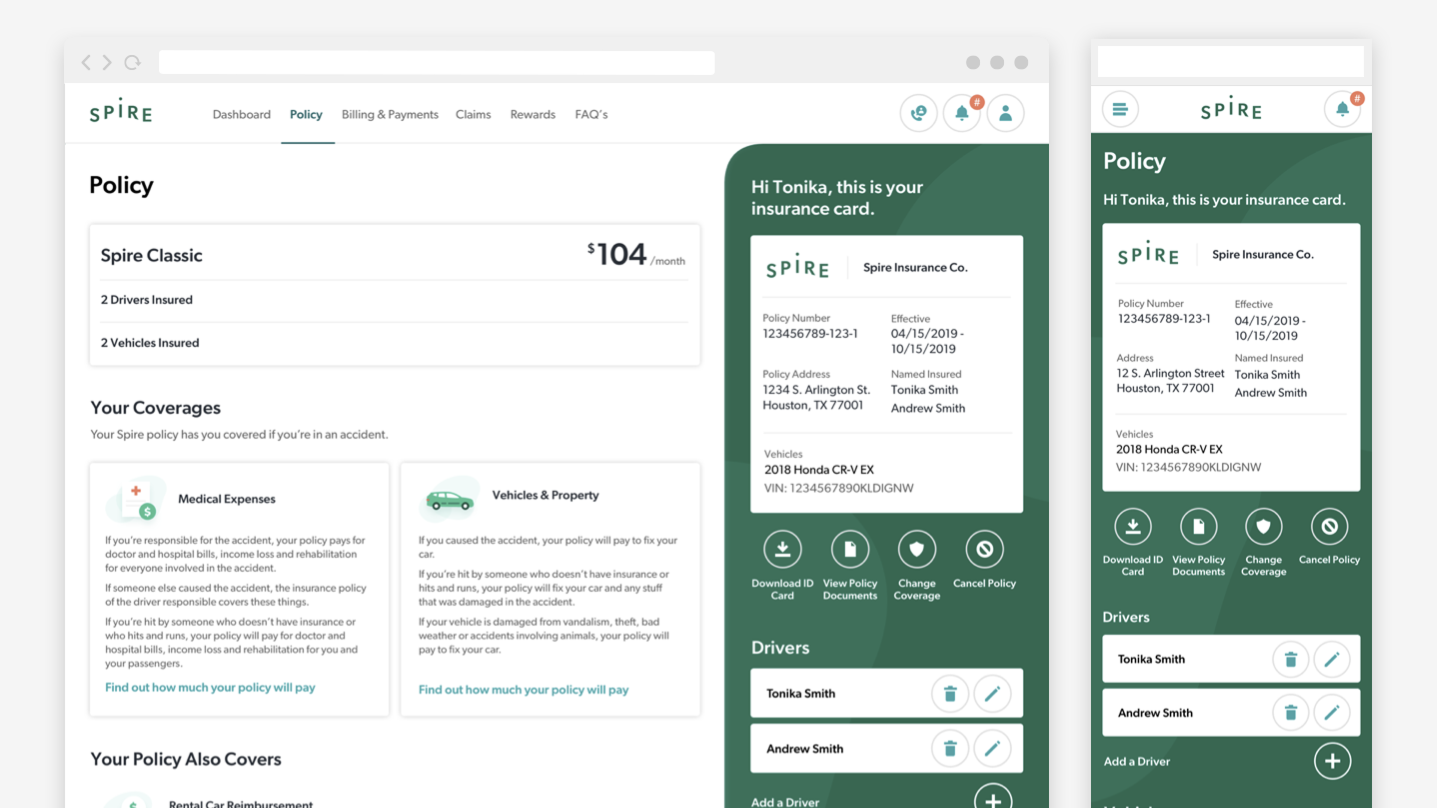
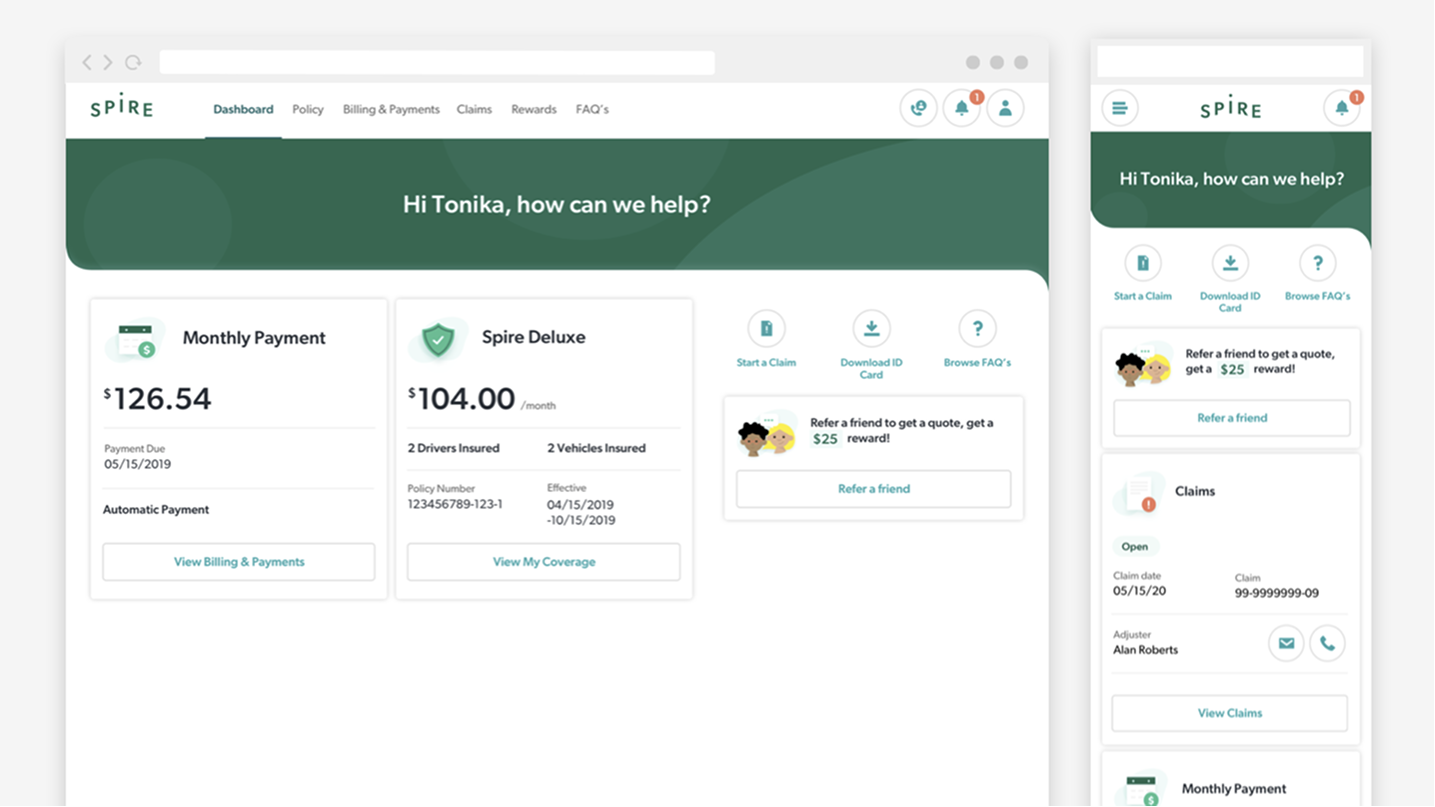
Nationwide was looking to branch out and launch a new product specifically targeted at millennial drivers. The team was responsible for bringing this product to life while focusing on ease of use and a personalized experience. We created a unique mobile app and online platform, allowing policyholders to manage their insurance easily. From purchasing a policy to filing claims, everything can be done with just a few taps.
CLIENT
Nationwide
SERVICES
User research & testing
UX design
Design system implementation
Product design
Product implementation
MY CONTRIBUTION
Conceptual design
Design system
UI Animations
Client & stakeholder management
Experience Design
User testing
TEAM
Me (Visual & UX Design)
Visual designer
UX designer
User Research Team
The Challenge was to design and build a millennial-focused auto insurance product that will anticipate users’ needs to help them make better choices and feel empowered.

The client was also creating this brand from the ground up.
New brands always face challenges in the market so it was important to differentiate and deliver on features. Meanwhile, other providers were also racing to release their own version of a similar product. It was crucial we got it right and got it out the door quickly.
The key tech challenge was utilizing and integrating telematics, which is the ability to track driving behaviors from your phone. That would allow the product to give up-to-date and accurate pricing models based on driving habits. It also needed to utilize modern technology to streamline the shopping process. Oh, and it needed to be done and out the door in a year. No problem, right?
APPROACH
Our goal was to reimagine car insurance for millennials by combining ease of use, transparent pricing, and a forward-thinking approach.
We wanted to make our experience truly enjoyable for our users and without any typical frustrations related to purchasing and managing car insurance.
By integrating telematics, we aim to delight the user with gamification and potential discounts based on their safe driving habits.
Targeted Persona
Our target persona is a self-reliant Millennial named. They're married, have a bachelor degree and own a single family home. They also own a hybrid vehicle and are considering a full electric vehicle. They have a household income of $108k.
Insurance Shopping
- Needs access to clear, actionable information when shopping
- Needs to feel respected, informed, and heard
Attitudes & Behaviors
- Self-reliant and likes to find answers to her own questions online
- Good for saving what she wants and confident about budgeting
- Time is more important to her than money
Techonology
- Interested in the latest technology
- Manages finances online
- Enjoys sharing on social media
- Uses digital assistants
Everyone loves a good whiteboard
To kickstart our discovery process, we laid the groundwork by defining core design principles and identifying a target user persona. This allowed us to maintain a clear focus throughout our design endeavors. Simultaneously, we conducted thorough market research, analyzing our competitors to understand the landscape.
Once we mapped out the car insurance shopping process, we proceeded to sketch initial framework designs for both the app and the website. To guide our design choices, we employed a design inspiration board, which compiled various design elements we admired, such as iconography, micro animations, dashboards, and shopping experiences. This board served as a visual repository to inspire and inform our design decisions.
Creating and refining IA diagrams for the shopping experience was key to pairing each step and the data collected with the technology working in the back end. These diagrams outlined the steps, system actions, modals, edge cases and moments of delight for the user. The IA diagrams were in place to keep all of the members of our team aligned.
My involvement in this phase of work was to actively plan and participate in on-site, creative workshops with the client and project team. We're capturing ideas, sketching out concepts, and employing many of the activities found in the Design Sprint methodology (like crazy 8's and paper prototyping in a day, etc.). I love the sketching phase not just because I love to draw but also because it can inspire more ideas when you're not limited by what's on the screen.
Executing the vision
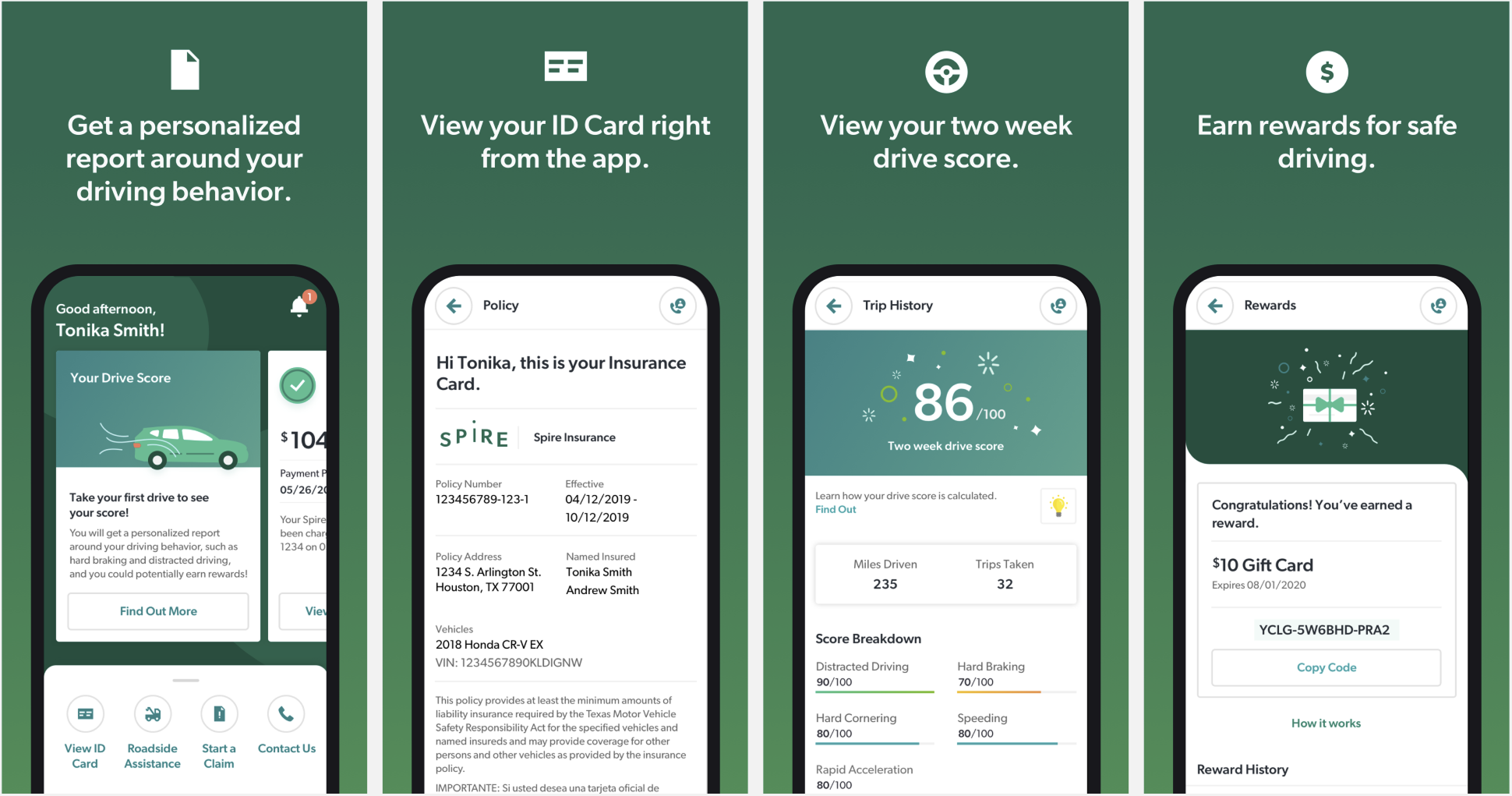
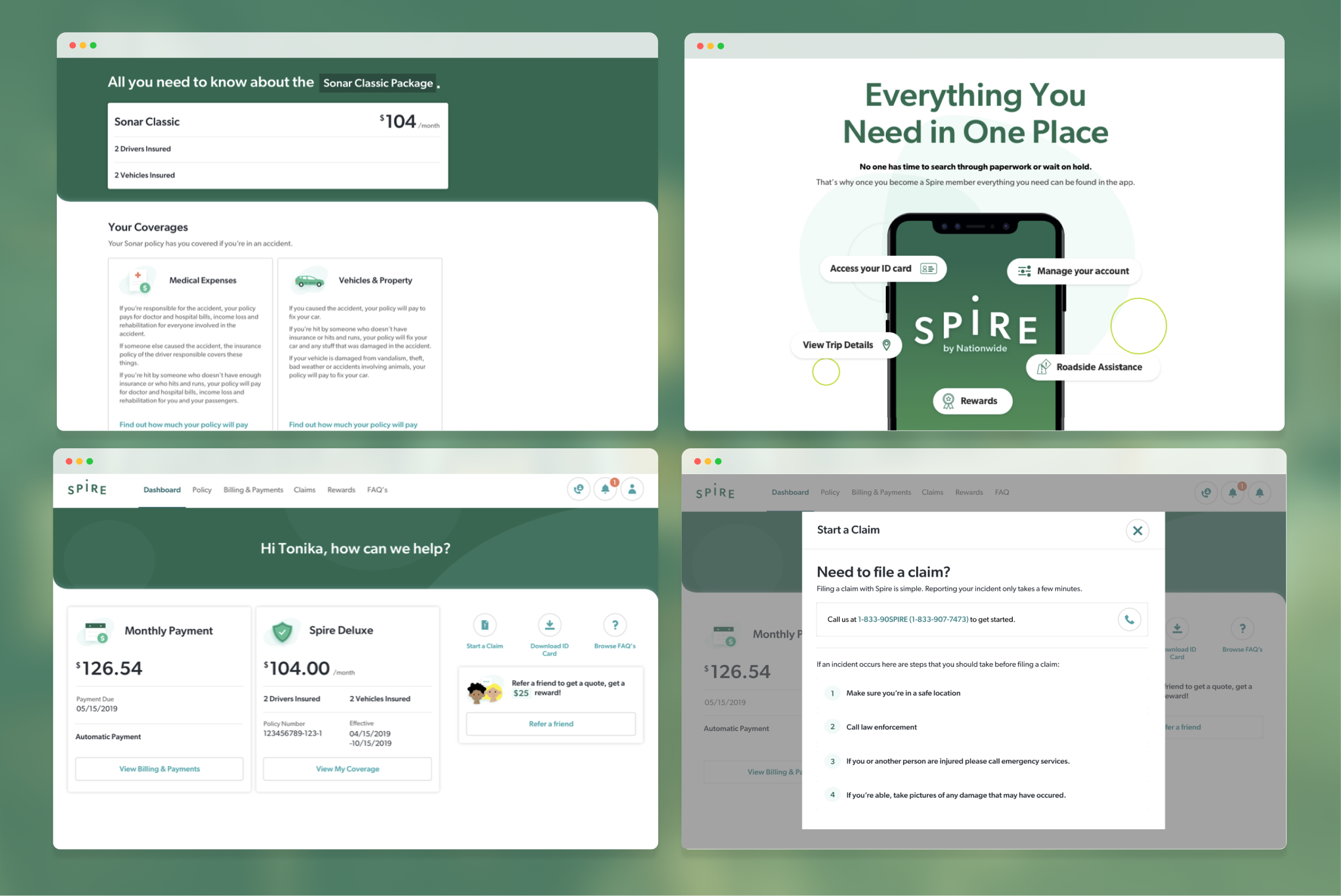
Our next step was to create wireframes from our diagrams and sketches. We iterated on possible interactions patterns for the shopping flow as well as possible app frameworks. We utilized a wireframe library of components for rapid creation and block level prototypes to test out interaction possibilities. With the new brand in hand, we created a visual style for our product. My role was then to bring the wireframe screens to life with the visual design system.
My involvement in this aspect of the work was to bouce between UX and Visual workstreams. We had two teams split by feature sets. I was the lead over one team and it was my job to plan the IA, build the wireframes for user journeys, test it with users and stakeholders and then apply the visual design language needed to make it real. I was also designing and animating micro interaction points used in the app.
TAKEAWAYS
Our efforts to reimagine car insurance for millennials resulted in a product that offers a user-friendly, transparent, and empowering experience.

The start of a new journey
This project presented a variety of challenges, from adopting a new brand identity and integrating complex techonolgy through telematics to enhancing the customer experience while meeting a demanding timeline. Our team met each challenge with determination and a strong focus on the user, demonstrating resilience, creativity, and a commitment to delivering meaningful results.
Users participating in the pilot saw lower prices and felt empowered to make self service changes in ways they hadn't before. The app's focus on empowering the user allowed for them to make policy changes that directly affected their wallet.
Users reported feeling more positive about the increase level of transparency in seeing their driving habits. Because the app allowed users insight into their own driving data, they had all the information they needed in order to make informed decisions. Giving them more power than ever before to make smart, informed choices related to a service that is often seen as overly complex.
The app launched as a pilot in select US cities before rolling out to a larger audience across the nation. In order to continue improving the product, six months of additional post launch research was planned to uncover opportunites for improvement based on users' needs and usage habits. After that it was time so send our app into the wild and transfer ownership of post launch support to the client's product team.
Master of karate and friendship for everyone.
The End